Description
A limit switch is a safety device used to control or direct the motion of a machine. It consists of a switch that is mechanically operated to make or break an electrical circuit when a machine reaches a predetermined position. Limit switches are commonly used in industrial automation, robotics, and machinery to prevent over-travel, provide position feedback, and ensure safety.
TYPES OF SWITCHES
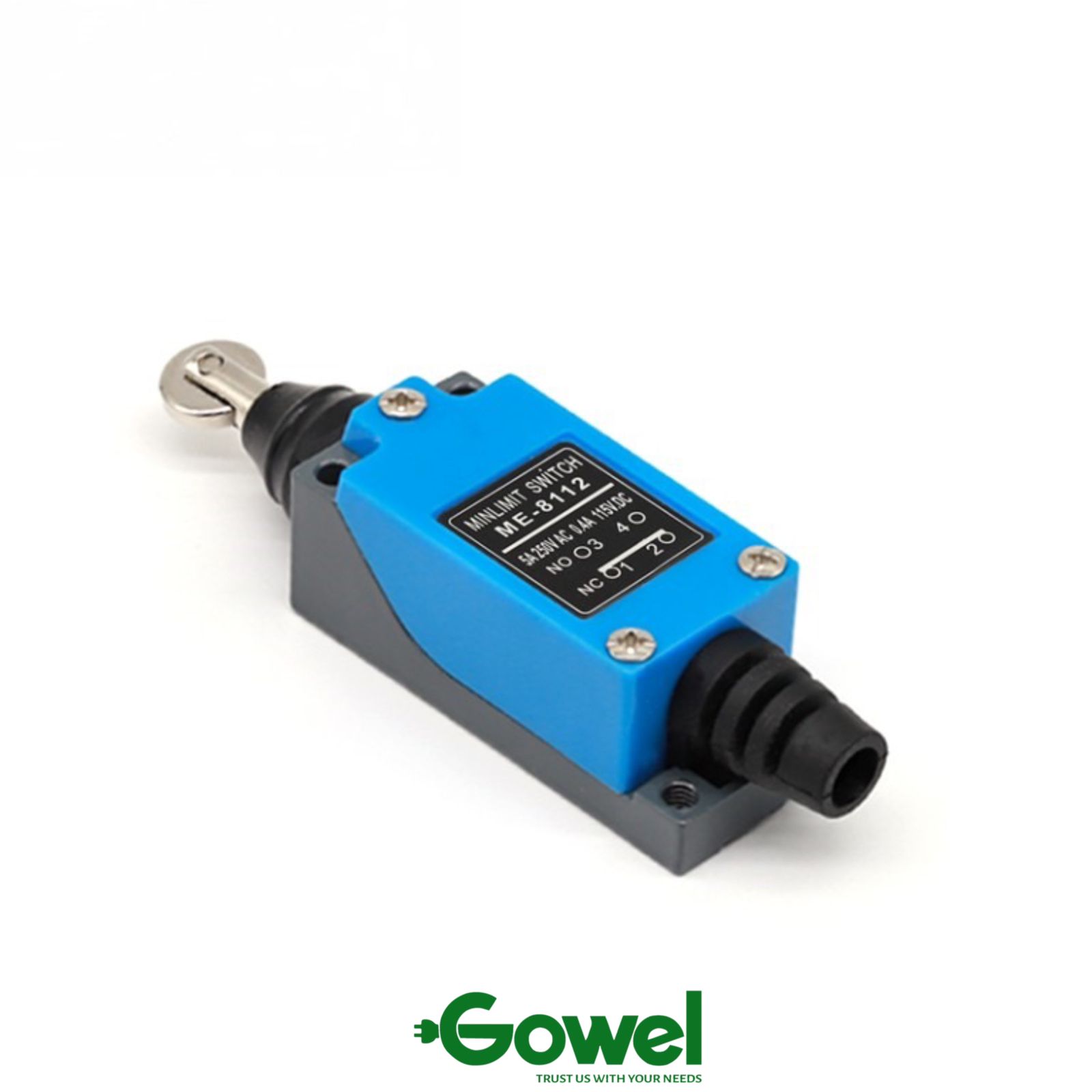
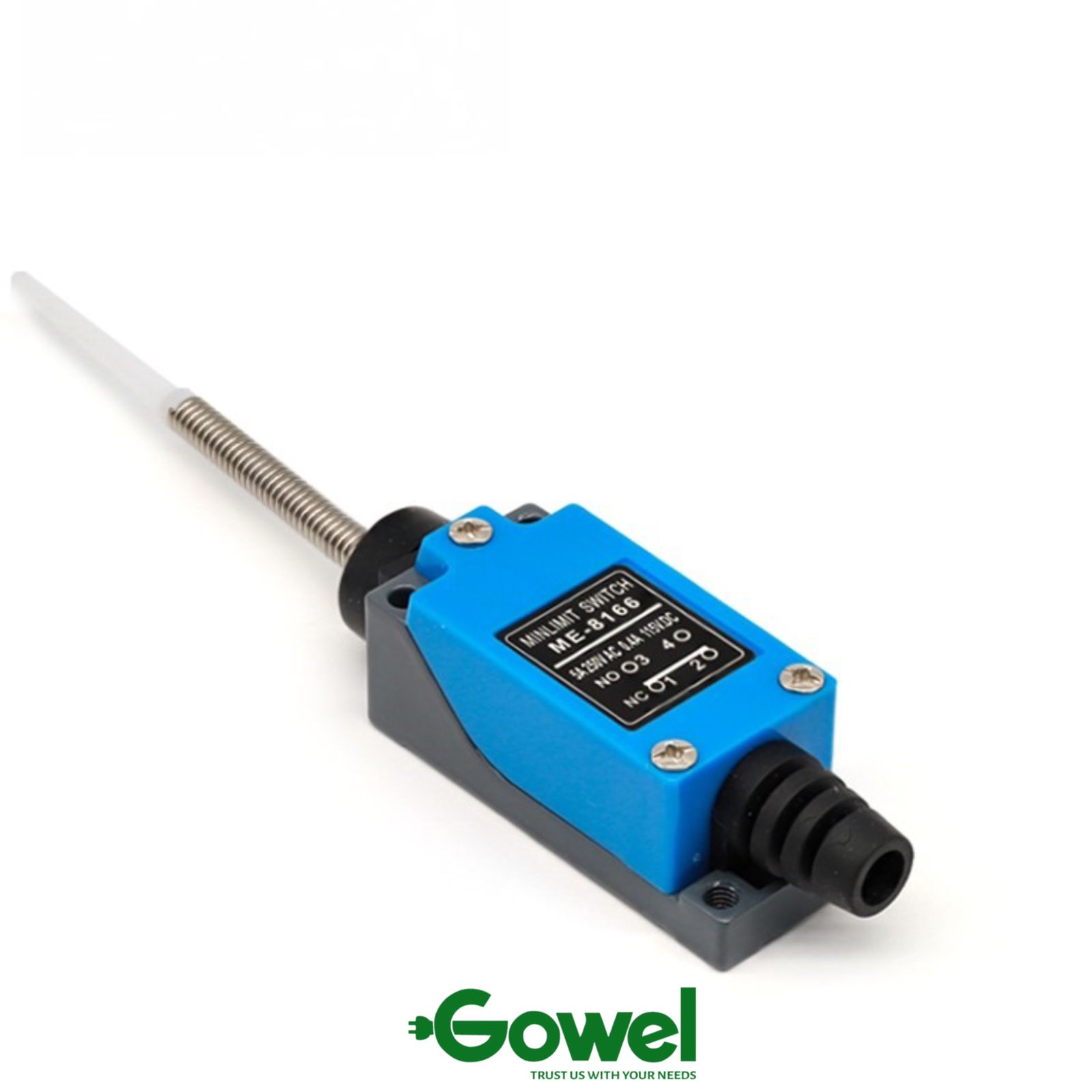
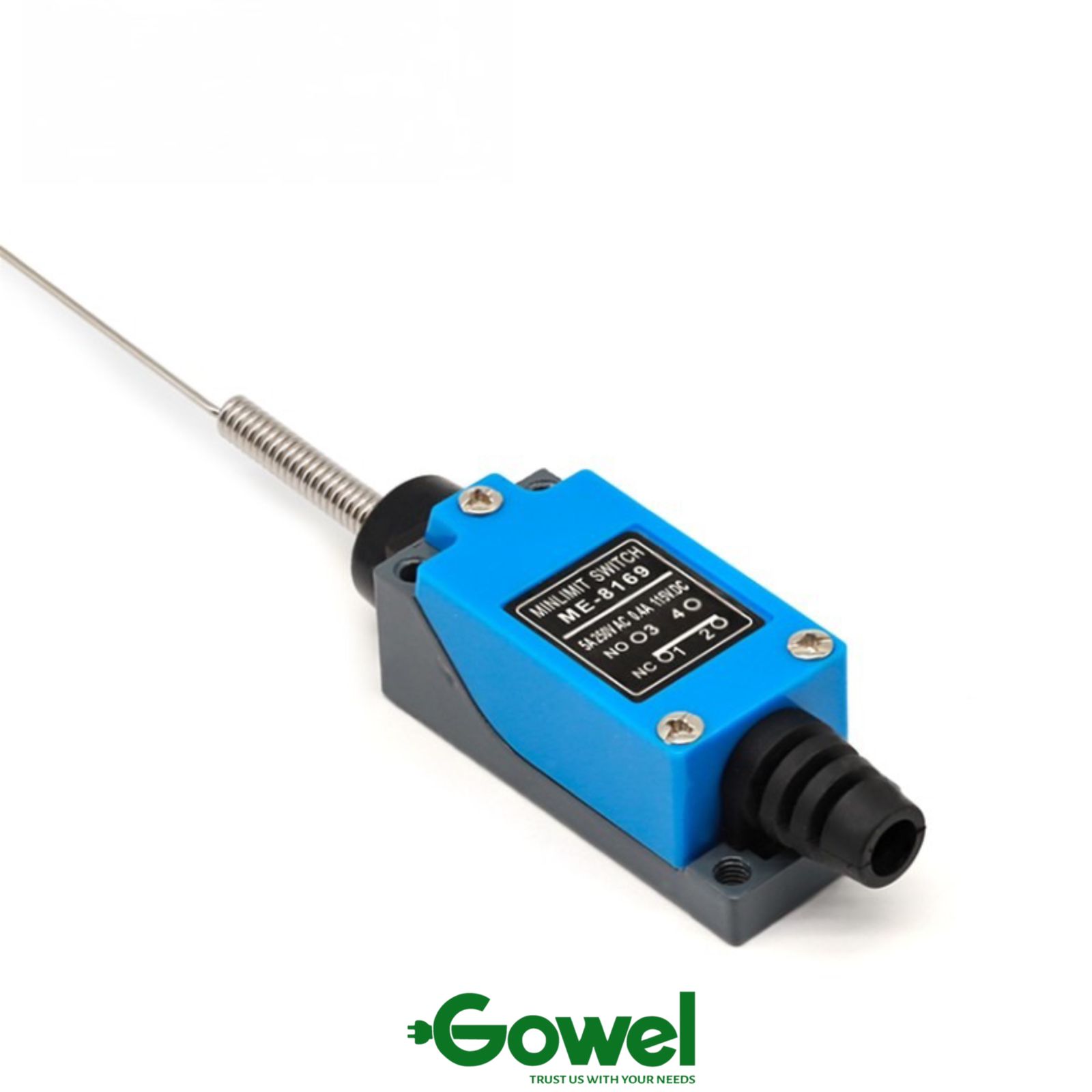
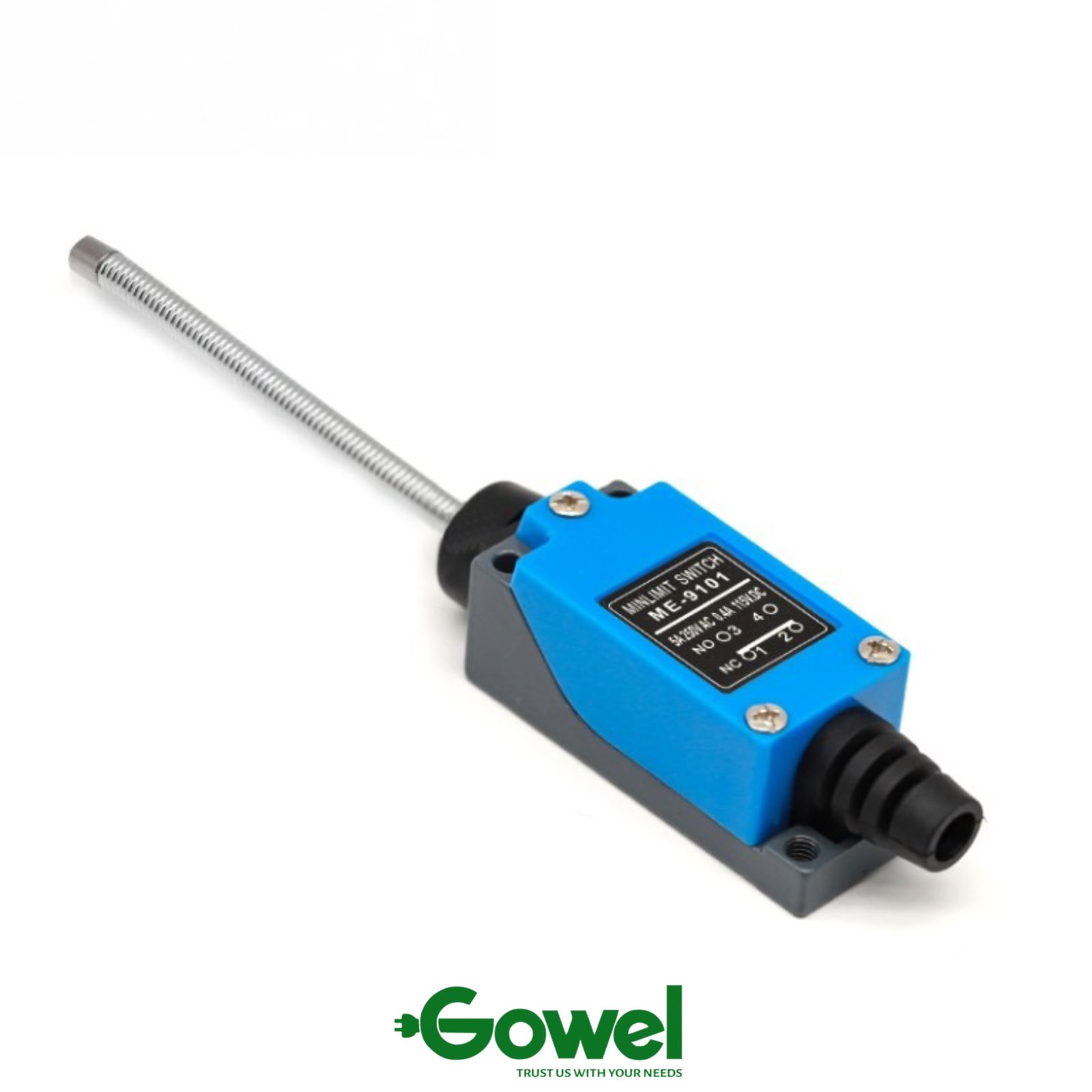
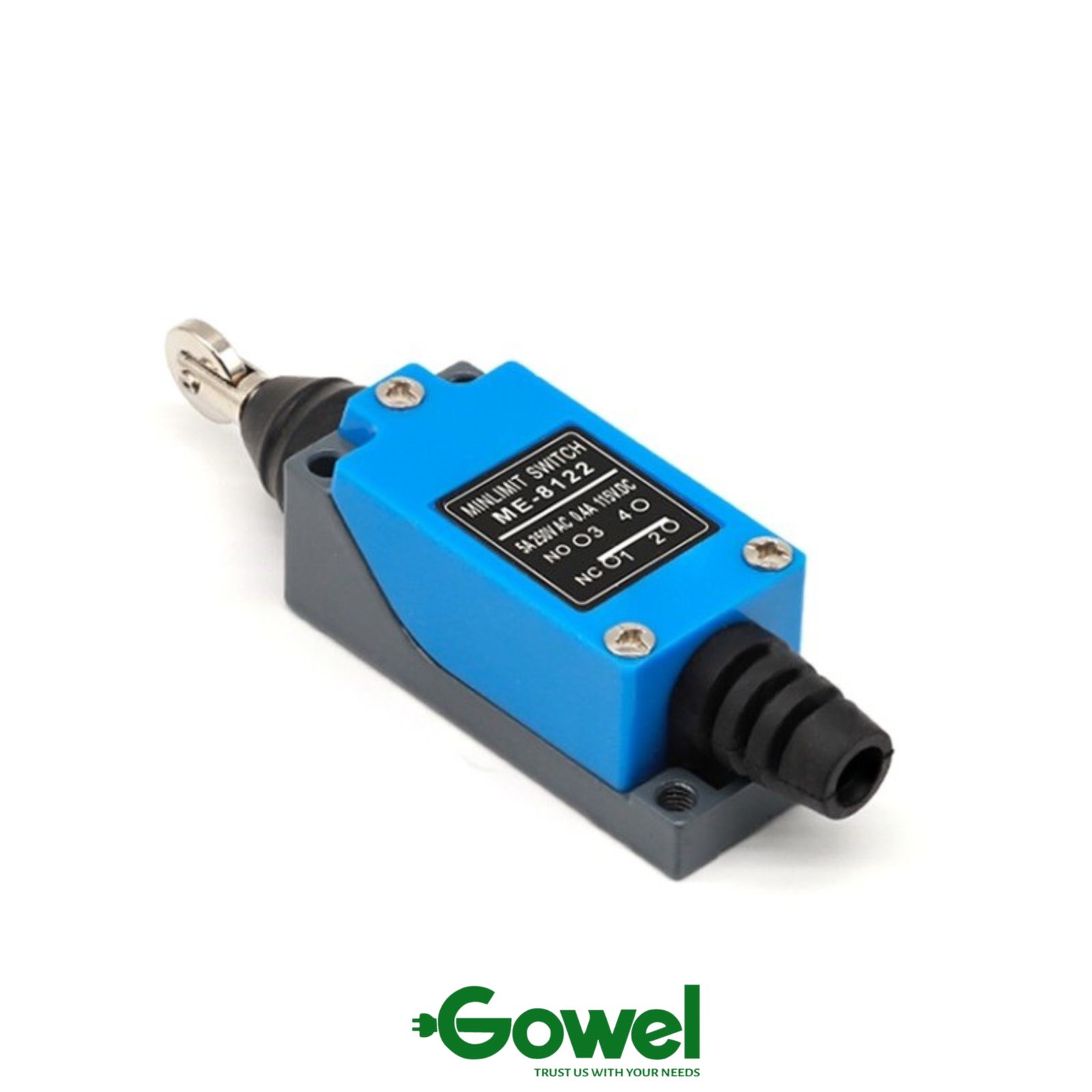
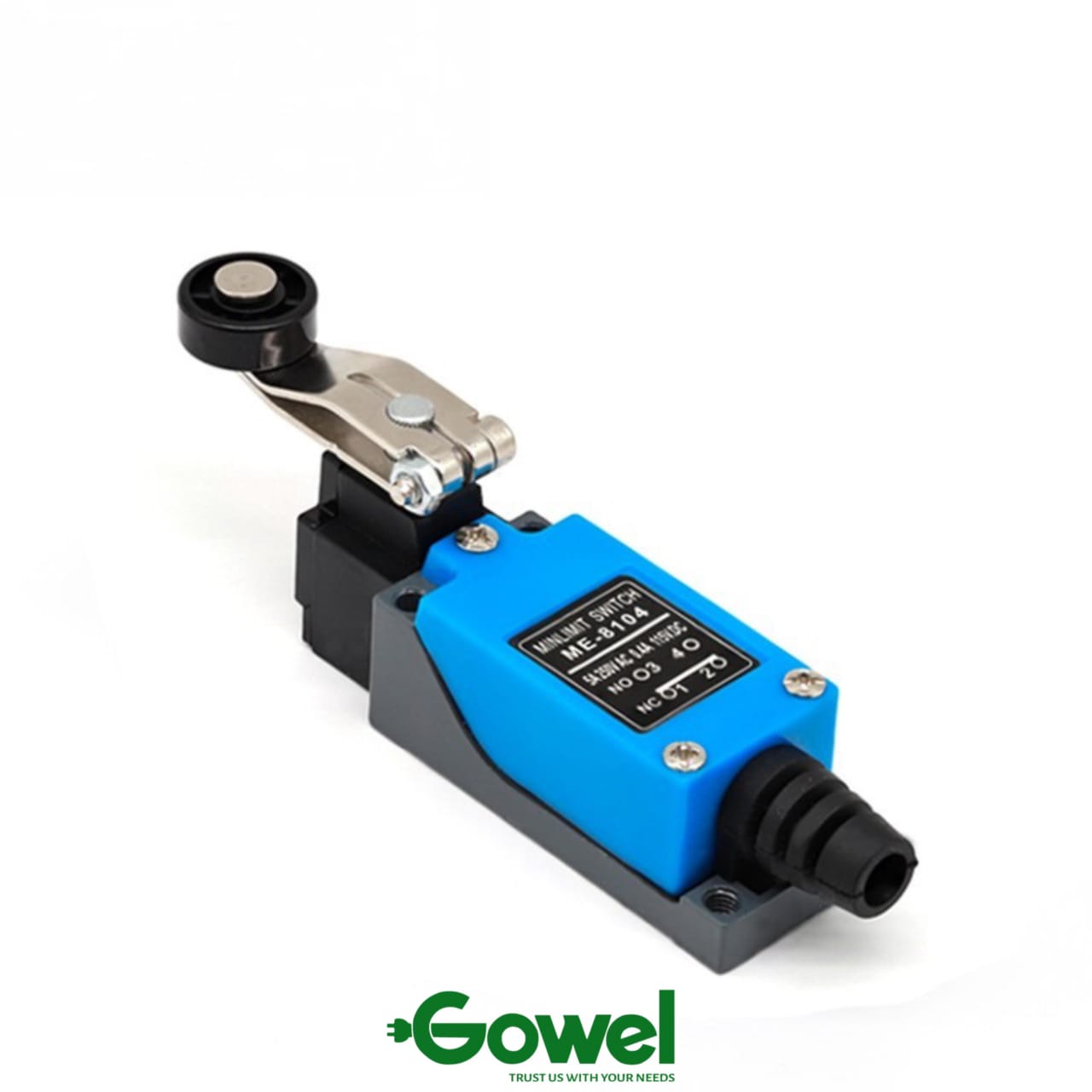
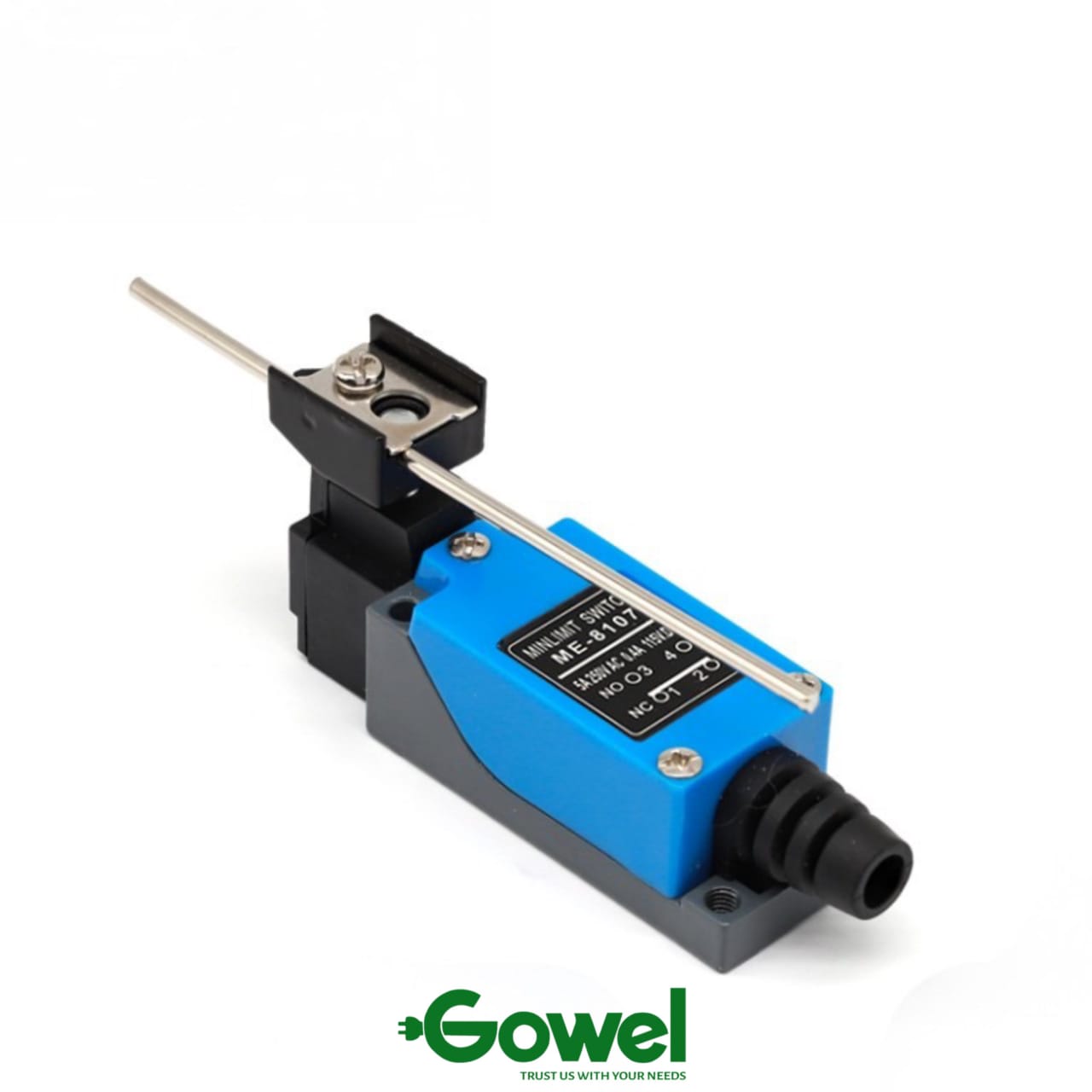
8104, 8107, 8108, 8111, 8112, 8122, 8166, 8169, 9101
Mechanical Limit Switches
Mechanical limit switches are the most common type, consisting of a lever arm that actuates a set of electrical contacts when moved by a machine part. They are reliable and cost-effective, making them suitable for a wide range of applications.
| Operation speed |
0.5mm-50cm/sec |
| Operating frequency |
Mechanical: 120 operations/minute Electical: 30 operations/minute |
| Contact resistance |
25mΩ max.(initial value) |
| Insulation resistance |
100mΩ min.(below 500VDC) |
| Dielectric strength |
1000VAC, 50/60 Hz for 1 minute between terminals of the same polarity |
| 1500 VAC, 50/60 Hz for 1 minute between current-carrying and non-current-carrying metal parts |
| 1500 VAC, 50/60 Hz for 1 minute between each terminal and groun |
| Vibration |
10-55 Hz,15 mm double amplitude |
| Shock |
Mechanical durable: 1,000m/Sec(about 100G’S)Malfunction:300m/Sec'(about 30G’S) |
| Ambient temperature |
-5~+65℃(With no icing) |
| Humidity |
<95%RH |
| Life |
Mechanical:10,000,000 operations above
Electrical: 500,000 operations above |
| Weight |
About 130 to 190g |
| Degree of protection |
IP65 |




Reviews
There are no reviews yet.